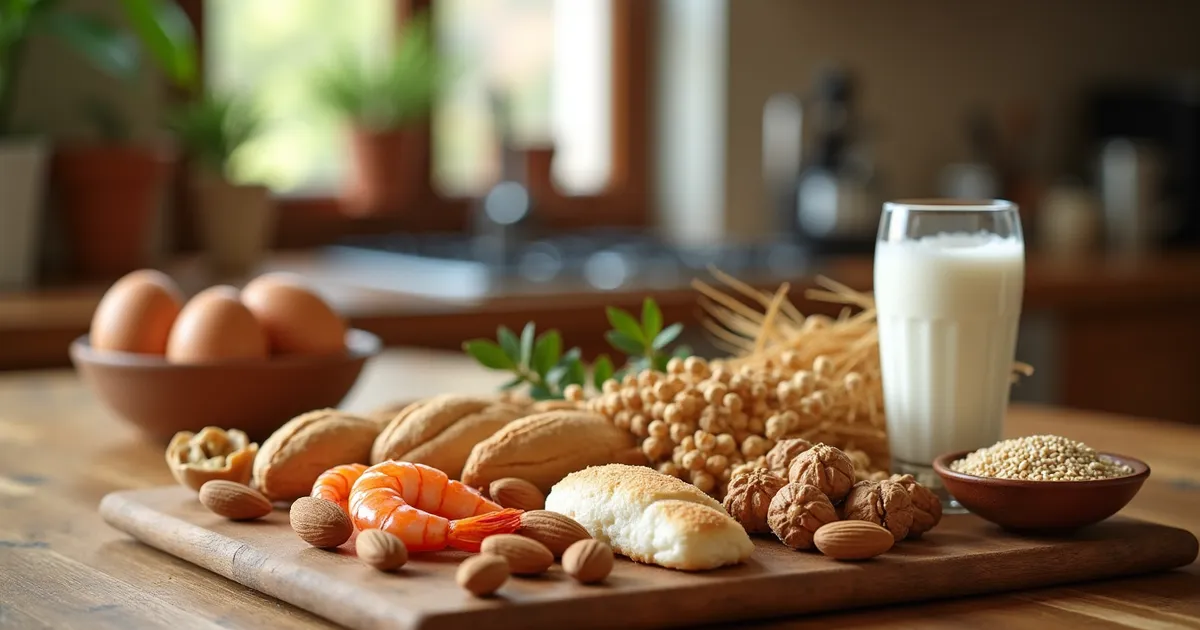
Yes. If you serve food in a bar or restaurant, you have to tell your customers which of the 14 allergens on the European list each dish contains, even if the dish is not pre-packed. You can do it on the menu, on a sign or, under certain conditions, verbally. What you cannot do is not have it.
This guide explains exactly what is required, what the 14 allergens are, how the information can be given and what the law says about penalties. It does not replace a consultation with your town council or with the health department of your autonomous community, who are the ones that inspect.
What the rules say
The obligation comes from Europe and is completed by a Spanish rule:
- Regulation (EU) 1169/2011 requires you to give information on the substances causing allergies or intolerances listed in its Annex II (art. 9.1.c). And it leaves each country to decide how the information is given when the food is not pre-packed (art. 44).
- Real Decreto 126/2015 is the Spanish rule for non-pre-packed foods, such as those in a bar, a café or a restaurant. It sets out how the information is given.
In short: no hospitality venue is exempt from this obligation because it serves a "set lunch" (comida del día) or has a short menu.
The 14 allergens you need to know
The list is in Annex II of Regulation (EU) 1169/2011:
| No. | Allergen | Common examples in the kitchen |
|---|---|---|
| 1 | Cereals containing gluten (wheat, rye, barley, oats, spelt, kamut) | Bread, batters, pasta, sauces thickened with flour |
| 2 | Crustaceans | Prawns, king prawns, crab, shellfish stocks |
| 3 | Eggs | Omelette, mayonnaise, batters, some desserts |
| 4 | Fish | Anchovies (boquerones), cod, fish stock (fumet), sauces with anchovy |
| 5 | Peanuts | Nuts served as an aperitif, sauces, some desserts |
| 6 | Soya | Soy sauce, some breads and industrial sauces |
| 7 | Milk (including lactose) | Cream, cheese, butter, béchamel |
| 8 | Tree nuts | Almonds, hazelnuts, walnuts, pistachios |
| 9 | Celery | Stocks, sofrito bases, salads, spices |
| 10 | Mustard | Dressings, sauces, cured meats |
| 11 | Sesame seeds | Burger buns, tahini, sushi |
| 12 | Sulphur dioxide and sulphites (at more than 10 mg/kg or 10 mg/l) | Wine, vinegar, dried fruit, some pickles |
| 13 | Lupin | Flours, lupin beans ("chochos"), some breads |
| 14 | Molluscs | Mussels, clams, squid, octopus |
Note that item 12 has a threshold: sulphites only count if they exceed that amount. All the others must be declared whenever the dish contains them, even in a small quantity, and also when they come in an ingredient that itself contains them (a powdered stock, a bought-in sauce, a bread).
Be careful: Annex II itself exempts some specific derivatives of certain allergens (for example, fully refined soybean oil). If you are unsure about an ingredient, check the manufacturer's label or ask your supplier.
How the information can be given in a venue
Real Decreto 126/2015 leaves several options, each with its conditions:
| What the rule says | Where |
|---|---|
| The particulars in art. 9.1.c of the Regulation must be shown with a clear reference to the substance that causes the allergy | Art. 4.1.b |
| The information can be given verbally if it is easily provided before the purchase is completed and is available in writing or in electronic format in the establishment | Art. 6.5.a |
| You must show visibly where the information is, or that the customer can ask the staff | Art. 6.5.b |
| That indication is not needed if there are labels or signs next to the food with the information | Art. 6.5.c |
| The mandatory particulars must appear at least in Spanish (castellano) | Art. 10 |
In practice, the simplest thing for a bar is one of these three:
- Allergens on the menu itself, with a symbol or a letter for each dish and a key at the end.
- A separate document (a laminated sheet, a sign or a QR code) with the allergen table for all the dishes, and a visible notice on the menu saying where it is or that staff can be asked.
- Signs next to the product, if you serve it at the bar or in a display case.
The important thing is that, if you give the information verbally, there must also be a written or electronic record in the venue. An answer from the waiter's memory, with nothing to back it up, does not meet what art. 6.5.a asks for.
What it is worth having ready
These are not literal obligations of the rules, but the practical way of being able to comply with them:
- A card for each dish with its ingredients and the allergens of each one, reviewed whenever you change a recipe or a supplier.
- The labels or technical data sheets of bought-in products (sauces, breads, stocks, cured meats), because that is where the information on hidden ingredients is.
- A member of staff who knows how to answer and knows where the document is. If a customer asks about an allergy, the answer must come from that document and not from memory.
- A notice about cross-contamination if your kitchen shares a fryer, griddle or utensils. The law requires you to give information on the substances in the dish; warning about this possibility is good practice that reduces risk.
What penalties the law provides for
The Ley 17/2011 on food safety treats as an infringement placing on the market foods "labelled in an insufficient or defective way" (art. 50.1.b) and sets these fine bands in its art. 52.1:
| Classification | Fine band (Ley 17/2011, art. 52.1) |
|---|---|
| Minor | Up to €5,000 |
| Serious | From €5,001 to €20,000 |
| Very serious | From €20,001 to €600,000 |
Those are the limits set by the law, not the fine a bar would get. In general, insufficient or defective labelling is a minor infringement (art. 51.1), and becomes serious when it entails a risk to public health (art. 51.2). The penalty is imposed by the competent authority, and the specific amount depends on the case. To find out how it applies in your area, ask the health authority of your autonomous community.
Beyond the fine, the underlying reason is a different one: a serious allergic reaction is a real risk for the person and a serious problem for the business.
Prepare your allergen table
If you want to build the table for your dishes without starting from scratch, this free allergen tool generates it from the ingredients you tick. Always check the result against your real labels: the information about your dishes is the establishment's responsibility.
If you would rather manage this inside a management app, Weko's recipes calculate the allergens of each dish and generate the allergen menu as a PDF. It is a help to keep the information in order; keeping it correct and up to date remains your job.
This guide is for information only and is not legal advice.
 Verifactu in bars and restaurants: when it becomes mandatory and what to do
 Verifactu and TicketBAI: how they differ and which one applies to your bar or restaurant
 Guest registration (parte de viajeros): which data is mandatory, what happens with minors and the deadlines